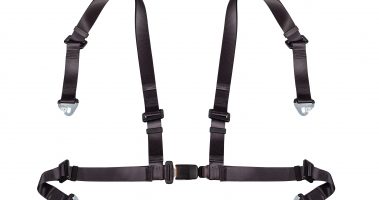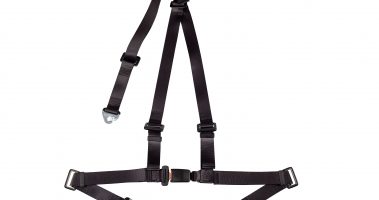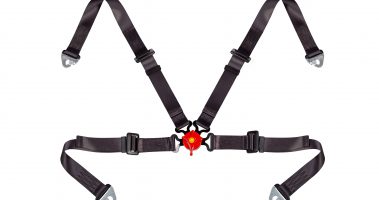
All modern seat belts are manufactured under European standard R16 and under ISO9002 quality control procedures and are either tested to European standard R16 for Modern seat belts or to British standard BS3254 for period style seat belts for vehicles up to 1973.


Lap straps can be used in the front and rear of cars but there are legislative restrictions as given below.
Lap straps are not a legal fit for front seats in Europe for post 1963 cars and we would not recommend them unless it really is your only option. For American cars or cars in America this is not a Legal issue and Lap straps can be fitted to vehicles up to the end of 1972. (Please check with your Local vehicle license office to ensure you are within your local legislation)
For vehicles registered from 1973, it is only permissible to fit lap straps in the rear, however from vehicles built from 2007 onwards, it is only permissible to have Lap & Diagonal seat belts fitted.
The lap section of any seat belt or harness should fit below you hipbone and across the upper most part of you thigh and not over your waist. You can choose from a standard lap strap or with the 75mm pad.
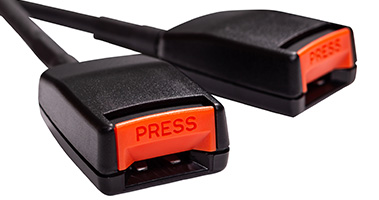
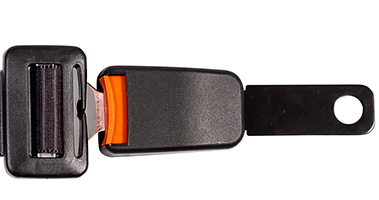

Not a common choice for cars generally but may have a use in certain applications, for example they have been used as Original equipment in Ford Escort and Volkswagen Golf Cabriolets from the late 1980’s. However for both of these cars it is possible to fit Lap & Diagonal seat belts.
ALR’s are Auto Locking Retractors. They pull out and retract back but in use they are fixed belts as per a standard Lap strap, so they can not be pulled out once you have put the seat belt on.
How do they Work?
An ALR uses a mini retractor with a locking device. Unlike a normal automatic seat belt, they do not have a webbing sensitive locking device. The locking device is triggered once you have pulled more than 300mm (12 inches) of webbing from the reel. You can continue to pull the webbing out as long as you do not allow even a mm to go back into the reel. Once you let, the webbing to retract you cannot pull anymore webbing out until you let the webbing completely retract and then start again. Thus when worn they act in the same way as a standard lap belt.
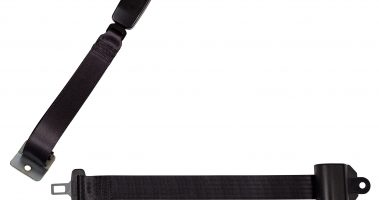
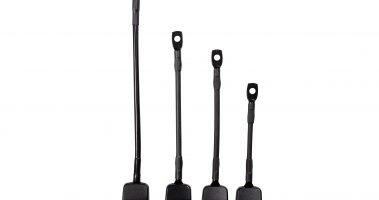
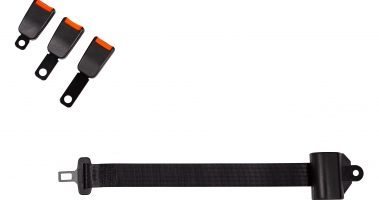

Static Lap and diagonal seat belts were fitted to most European made cars between 1963 through to the early/mid 1970’s.
In parts of Europe and the USA, some cars were fitted with Diagonal only seat belts, though this was not an option for the UK. We would recommend Lap and diagonals over diagonal only seat belts as there will not be an issue over finding a suitable mounting point in the floor or sill for most vehicles and offer vastly improved safety.
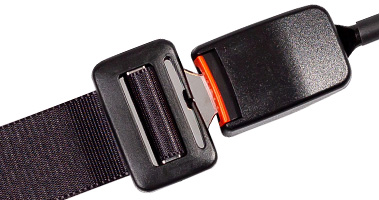
Modern seat belts using cable stalks for the front are known as single handed seat belts, as the rigid buckle (stalk) allows the seat belt to be worn with just one hand as opposed to both hands with webbing buckles.
We have a full range of different anchor plates and either webbing, bladed or cable buckle options. Webbing buckles range from 150mm through to 450mm as standard, plus there are options for adjustable webbing buckles. Bladed buckles come in 90, 126, 140 and 185mm lengths. Cable stalks are 200, 310, 350, 450 and 525mm lengths as standard.
If you require a Modern Static Lap and Diagonal for the front in a vehicle with bench seat you can use the long adjustable webbing buckles as cable stalks are not generally suitable for this type of seating.
Please note that for most vehicles a webbing buckle should be used for rear seat applications.
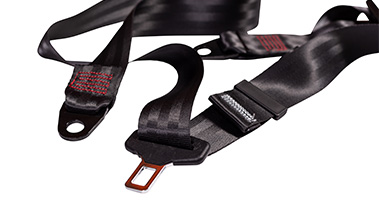

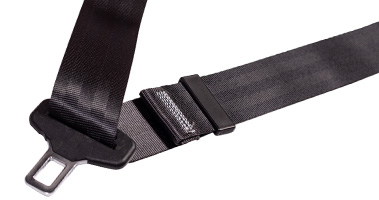

Vehicles not originally designed for automatic seat belts can still be retrofitted with them. Automatic lap and diagonal seat belts are suitable for vehicles of any age, including those fitted with front bench seats.
In bench-seat applications, fitting rigid cable stalks can be difficult; therefore, webbing buckles are generally recommended.
Automatic (inertia-reel) seat belt retractors must be installed at specific angles and allow a tolerance of approximately ±8° from their designated mounting angle. The standard retractor angles available are shown below.
Modern front seat belts using cable stalks are commonly referred to as single-handed seat belts, as the rigid buckle allows the belt to be fastened with one hand. For front seating positions in vehicles manufactured after 1972, cable stalks and bladed buckles must be used unless a bench seat is fitted.
We offer a full range of anchor plates and buckle options, including webbing, bladed, and cable stalk types. Webbing buckles are available in 150–450 mm lengths (with adjustable options), bladed buckles in 90, 116, 140, and 185 mm, and cable stalks in 200, 310, 350, 450, and 525 mm.
Automatic seat belts are suitable for both front and rear seating positions. Front installations typically use cable stalk or bladed buckles, while rear seating positions normally require webbing buckles.
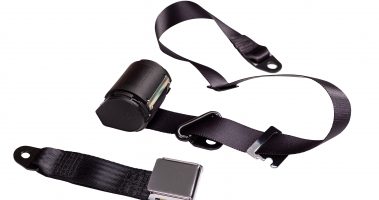
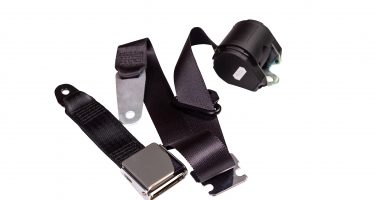
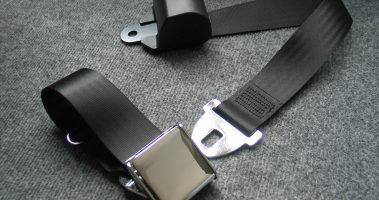

Full Harnesses sometimes know as Racing harnesses as with general seat belts, come in very many different configurations. 3 point, 4 point, 5 and 6 point, they are even available with an Automatic reel even an electrically operated reel that will give you the security of a standard Harness and the movement that an automatic reel gives you when required for manoeuvring the vehicle for parking etc.
Harnesses can be made with Full FIA approved Twist Buckles, modern buckles as you find in our standard modern lap and diagonal seat belts or if your car was build prior to 1973 a Period Style Chrome Buckle.
We also have a range of full harnesses suitable for Children from approximately 4 years upwards.